Home · Services · Lighting & Ceiling Fan Installation
Lighting & Ceiling Fan Installation in Los Altos, CA
Quick answer
Fixture work that starts with structure in Eichler glass and beams, and with box ratings in low ceilinged ranch rooms.
Lighting in Eichler rooms starts with structure: beams, glass, and almost nowhere to hide a box, so fixture plans are drawn, not improvised. Ranch rooms offer the opposite, low ceilings and early boxes never rated for a fan's movement. Kitchens remodeled across decades get their lighting circuits audited against the loads now hanging on them. The constant is the check before the fixture: box rating, circuit capacity, and switching matched to how the room is actually used.
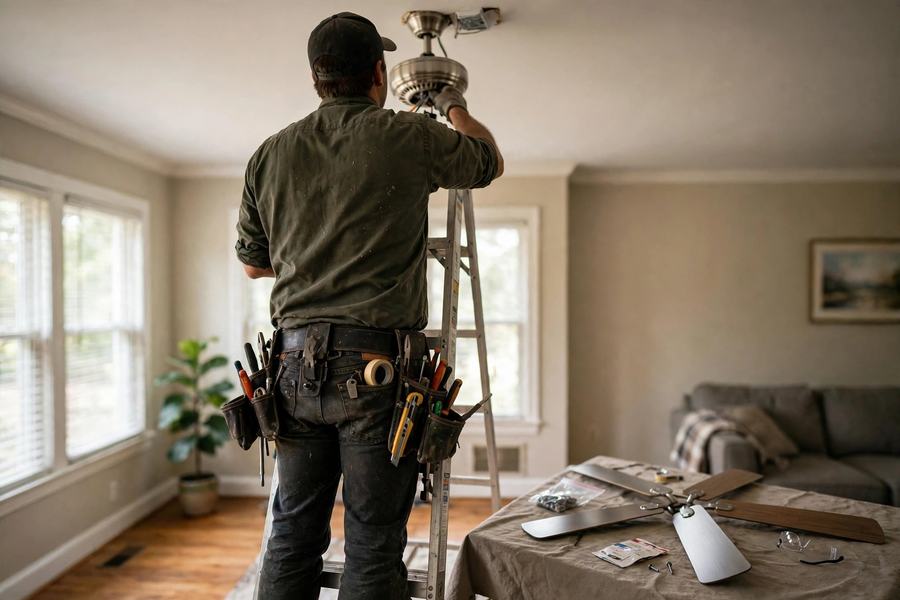
Signs you need lighting & ceiling fan installation
- A fan that wobbles, hums, or hangs from a box never meant to hold it
- Rooms lit by one tired ceiling fixture and a plan for recessed lighting
- Exterior lighting for a dark entry, dock, or lanai
- Fixtures flickering on a circuit that tests sound (a fixture fault, not a wiring fault)
- A chandelier or high ceiling fixture beyond ladder and comfort
What the job involves
What affects the price
- Fixture count and ceiling height and access
- Whether new switching or only fixture swaps are in scope
- Fan rated box installation where the existing box is not rated
- Exterior runs and any trenching or conduit for landscape and dock lighting
When it is an emergency
Lighting is scheduled work, except where the fault is the circuit rather than the fixture: flicker across multiple fixtures, heat at a switch, or a breaker involved moves the job to the repair pages. A fan that drops its speed settings or reverses randomly is usually a control or receiver fault, a part level fix, not a new fan.
PLACEHOLDERLighting & Ceiling Fan Installation across the Los Altos area
Related services
Breaker Panel Replacement & Upgrades
Service upgrades scoped from a load calculation that inventories the whole electrification plan, cars coming included, with permit and utility steps named.
Emergency Electrical Repair
Same day triage separating a PG&E street outage from a house fault, read against panels serving the most electrified households in America.
Wiring & Rewiring
Rewiring planned around post and beam architecture and ranch additions, access named room by room because the diplomacy is half the craft.
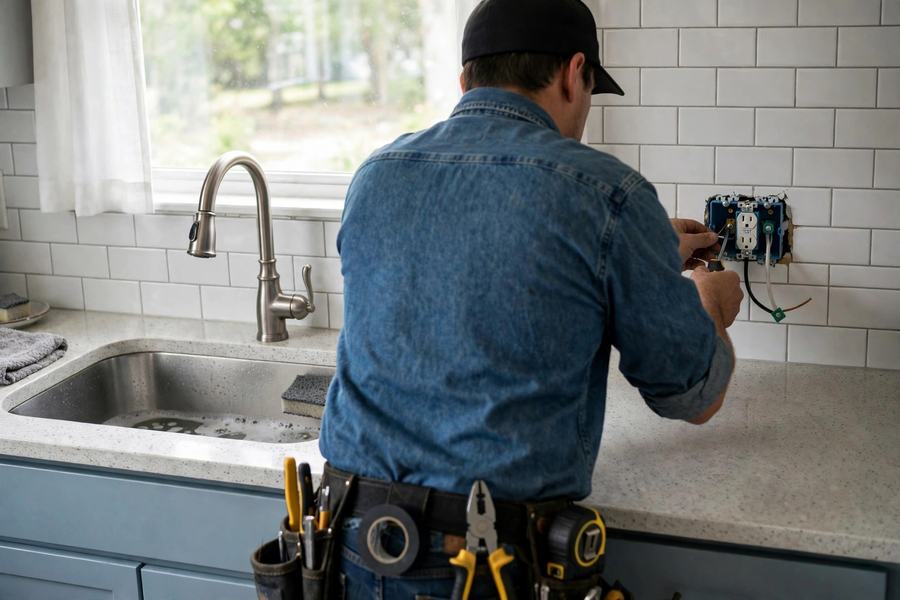
Outlet, Switch & GFCI Repair
Two prong remedies in the honest three forms, ground fault protection by tester, and home office circuits audited like wet ones.
Lighting & Ceiling Fan Installation questions, answered
When is lighting & ceiling fan installation an emergency?
Lighting is scheduled work, except where the fault is the circuit rather than the fixture: flicker across multiple fixtures, heat at a switch, or a breaker involved moves the job to the repair pages. A fan that drops its speed settings or reverses randomly is usually a control or receiver fault, a part level fix, not a new fan.
What affects the price of lighting & ceiling fan installation in Los Altos?
The main price factors for lighting & ceiling fan installation are covered in the cost section above. The contractor confirms the exact price in a written estimate after seeing the job, and nothing is owed until you approve it. The call and the referral are free.
What is different about electrical work in an Eichler?
The architecture argues. Post and beam construction, walls of glass, flat or low pitched roofs, and original radiant era systems leave few of the cavities and chases a conventional house offers, so circuits, lighting, and access are planned drawings before they are holes. Panels are often original to a house whose loads have tripled. The honest Eichler scope names its access plan room by room and prices the diplomacy with the architecture as part of the job, because in these houses it is not overhead; it is the work.
We are adding a second EV and a heat pump. In what order should the electrical work happen?
Arithmetic first, hardware second: a load calculation that inventories what the house draws now and what the plan adds, cars at their real charging rates, the heat pump at its cold morning draw, the range, the dryer. From that one document the order usually writes itself: service or panel capacity where the math requires it, then the dedicated circuits, then the appliances. Households that buy the car first and calculate later end up charging at a trickle on a shared circuit while the panel job waits for a permit that could have been filed in the calm season.
How much does an electrician cost in Los Altos?
Published national guides put electricians commonly at $50 to $100 or more per hour plus a service or trip fee, with small jobs (a device replaced, a fault traced) often landing between $150 and $400 all in. By the project: breaker panel replacement commonly runs $1,300 to $3,000, a generator interlock or transfer switch hookup $500 to $1,500, whole home surge protection a few hundred dollars installed, and whole home standby generators $10,000 to $15,000 or more installed. Written pricing after the assessment, with permit costs stated, is the number to compare.
Request a callback
Prefer to talk later? Leave your details and an independent local pro will call you back. No charge to you, no obligation.
Adobe Creek Electric is a free referral service. Submitting this form connects you with independent local contractors who provide the work.